The Sound of Sirens
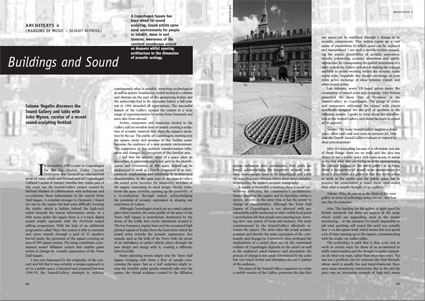 ‘Buildings and Sound’, Fourth Door Review
Salomé Voegelin: What was your piece ‘The Sound of Sirens’ about?
John: I designed 100 different warning sounds from scratch: I’ve always had a love-hate relationship with alarms and wanted to use this opportunity to manipulate these public sounds in a public space. The title is a pun on the Simon and Garfunkel song ‘The Sounds of Silence’, and through that a reference to Cage’s ideas on silence and its non-existence.
Salomé Voegelin: And how did the public react?
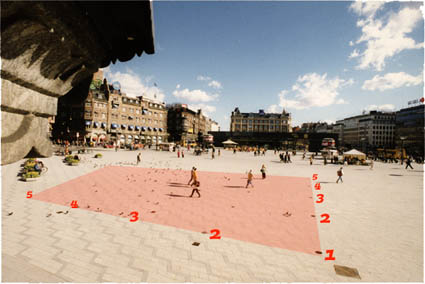
John: During the testing and ‘choreography’ of my piece, a representative of Copenhagen City Council came to the gallery saying that people were frightened and confused, and as a result they were imposing an official ban. I hadn’t set out to be deliberately confrontational, and in fact rejected another idea for a piece which involved ricocheting gunshots partly on the grounds that it might upset the authorities or the public — I guess you never know when you’re going to hit a nerve. The majority of people on the square had very positive reactions to my piece, whether or not they were aware of the Sound/Gallery’s existence. Several people commented that listening to the sirens whizzing around you and bouncing back and forth across the square was like being under attack, but added that being aware that there was no real danger allowed you to enjoy the experience, which was very much in line with my intention to explore the extent to which it is possible to divorce warning sounds from the anxiety that usually accompanies them. One group of bemused school children came to the conclusion that the sirens were a way of telling which drains were blocked and that I must have been relaying that information via walkie-talkie to someone who could clear them. Perhaps I’m the first sound artist to have been mistaken for a drain inspector: it gives new meaning to the term ‘multimedia’.
‘Buildings and Sound’, Fourth Door Review