Upcountry
· Purcell Room, London (4-ch) 1999
· AGON Acustica Informatica Musica, Milan (8-ch) 2002
· Broadcast in the UK, US, Germany, Canada, Australia
· Sonus online, curated by Katherine Norman, 2004
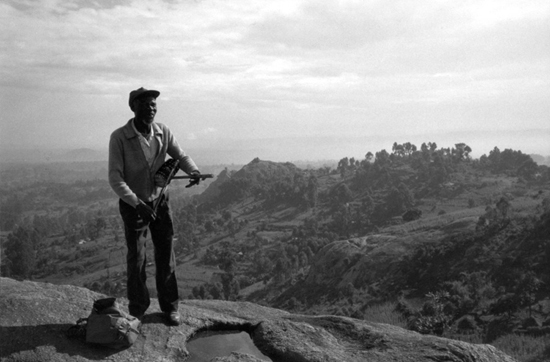
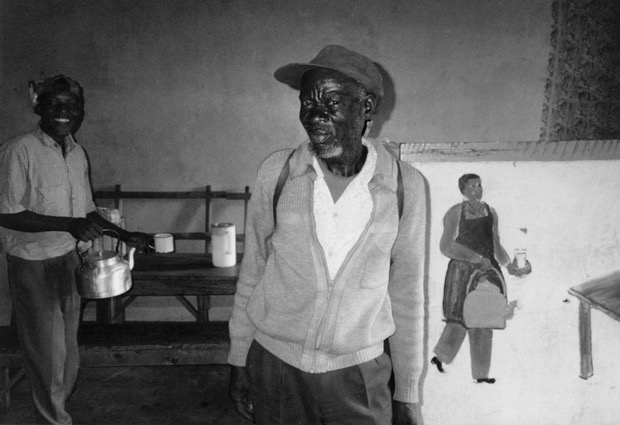
I travelled to Kenya to make recordings for a composition about William Ingosi Mwoshi, a neo-traditional master musician from the Luhyia community whom I met on an earlier trip, after which I composed James Kamotho Kimani. On that occasion, Ingosi invited me to visit his home near the village of Kamulembe, in the western highlands north of Lake Victoria.
Investigating ways of moving back and forth between field recordings and an abstraction based on the rhythmic complexity and unique sonic characteristics of Ingosi’s music and his environment, Upcountry moves beyond conventional notions of portraiture to become as much about the place and my memory of it as about Ingosi himself. In the gap between my experience and the way it is communicated through the soundwork, I sought ways of working with sound that would express the subjectivity of my perspective without abandoning the context from which the original sounds arose. As John Miller Chernoff puts it in relation to the anthropologist, “finding the proper level of abstraction to portray with fidelity both the relativity of his [sic] own viewpoint and the reality of the world he [sic] has witnessed necessarily involves an act of interpretation.”
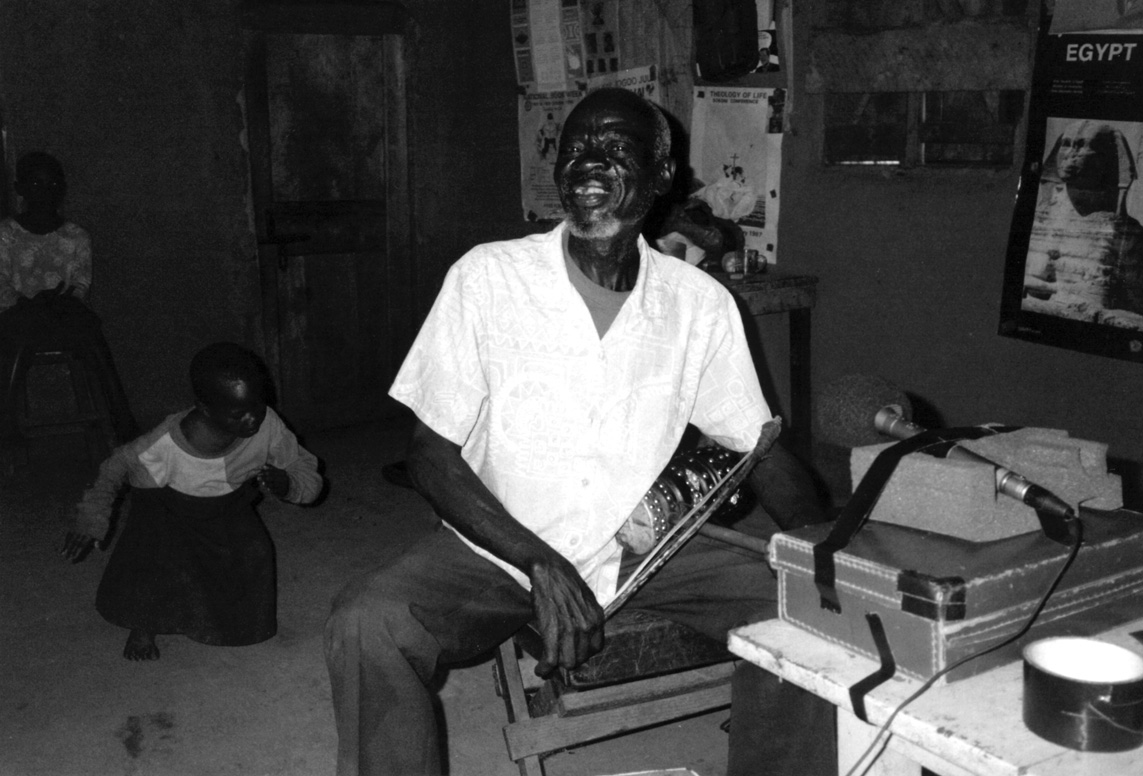
“John Wynne’s Upcountry is—part of the time—a musical portrait of Kenyan master musician William Ingosi Mwoshi, who plays, sings and speaks about his music, cites its roots and his. The environment of a Kenyan village colours his expression and makes his world. He, his locality, and the words and music he creates appear indivisible. A documentary ensues. Ingosi’s time.
“John Wynne’s Upcountry is—part of the time—an abstract journey. It often takes a route inland—upcountry, in fact. Ingosi’s vocal inflections become material for Wynne’s cool, sinuous tones. Layered, whittled down to bare bones, or mixed into new strata; at times Wynne’s abstractions stretch out to measure space quite differently from Ingosi’s speech rhythms, or indeed the rhythms of his songs. Wynne’s time.
“The sonic jump cuts are sometimes quite abrupt. But documentary and abstraction are difficult to reconcile. And the more I listen, the more I like the way Wynne lets them disentangle, and even disagree. You can be with Ingosi; you can be with Wynne. You can keep one person’s world in mind whilst listening to the other’s. There’s no disrespect intended (quite the opposite in fact). And it isn’t that difficult to accept both worlds. A portrait that really sings is, after all, as much about the painter as the person in the chair. And observing the distance between the two is part of the whole experience.”
Katherine Norman, SonusFor the full text of this essay and other works by Francis Dhomont, Kim Cascone, Francisco López, Magali Babin, Paul Lansky, and Martin Gotfrit, see the Canadian Electroacoustic Society’s Sonus, where you will also be able to hear all works in their entirety.